Exploring Dango: When to Choose a Chunky Sans Serif for Your Brand
The Anatomy of a Playful Typeface
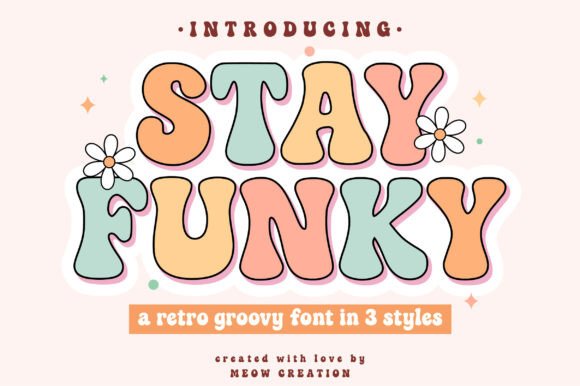
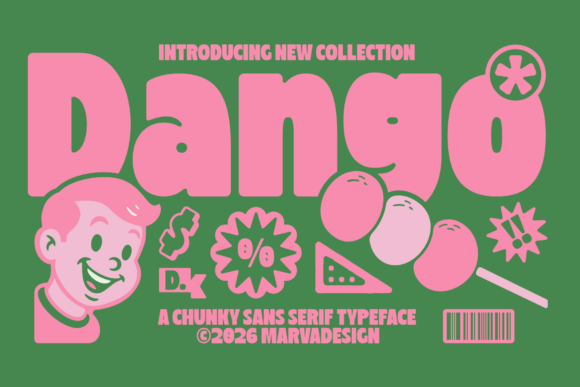
In the vast ecosystem of typography, choosing the right font is less about finding the "best" and more about identifying the perfect fit for a specific visual language. Dango represents a specific archetype in the sans serif family: the ultra-bold, rounded display typeface. Characterized by its heavy weight and minimal negative space, this font style draws inspiration from the soft, chewy aesthetic of traditional Japanese dumplings. It is designed to command attention immediately, utilizing chunky letterforms that feel tactile and substantial. For designers and brand strategists, understanding the mechanics of Dango is the first step in determining if this high-impact style aligns with their project’s narrative.
Unlike geometric sans serifs that prioritize clean lines and neutrality, or grotesque fonts that focus on industrial efficiency, rounded display fonts like Dango prioritize personality. The curvature of the terminals and the uniform stroke width create a visual texture that is soft to the eye. This design choice eliminates sharp angles, resulting in a typeface that feels approachable and friendly. However, this distinct personality is a double-edged sword; it offers immense character for headlines but requires careful consideration regarding context and audience.
High-Impact Use Cases: Where Dango Excels
The primary strength of Dango lies in its ability to function as a visual anchor for brands that rely on energy and approachability. Because the font is designed for maximum-impact weight, it is rarely suited for body copy. Instead, it thrives in environments where brevity and visual punch are required. Evaluating the specific applications of Dango helps clarify its utility compared to more conservative alternatives.
Snack Packaging and Food Branding
One of the most natural fits for a font like Dango is the food industry, specifically within the snack sector. The rounded, soft aesthetic mirrors the texture of many consumables, from gummies to baked goods. When a brand wants to communicate that a product is fun, indulgent, or satisfying, a heavy sans serif can evoke those feelings subconsciously. In a competitive retail environment where a consumer makes a decision in seconds, the legibility and boldness of Dango can help a package stand out on a crowded shelf.
Streetwear and Modern Toy Logos
The "chunky" aesthetic has seen a resurgence in streetwear and toy design, paralleling trends in footwear and graphic design that favor oversized silhouettes. Dango fits seamlessly into this visual landscape. For independent streetwear brands, a bold typeface can convey confidence and a break from traditional luxury minimalism. Similarly, in the toy industry, where products are often targeted at children or collectors of nostalgic items, the playful nature of rounded sans serifs helps bridge the gap between whimsy and modern design.
Digital Headers and Social Media
On digital platforms, screen resolution and user attention spans dictate design choices. Dango performs exceptionally well as a hero font for social media headers or pop-art style graphics. Its heavy weight ensures that it remains legible even when viewed on small mobile screens or against busy, high-energy backgrounds. For brands cultivating a "pop" aesthetic, this typeface provides the necessary weight to balance vibrant colors and complex imagery.
Comparative Analysis: Evaluating Tradeoffs
When researching typeface options, it is essential to compare the stylistic choice of Dango against other categories of sans serifs. The decision usually comes down to a tradeoff between personality and versatility.
Character vs. Neutrality
A standard geometric sans serif (such as Futura or Montserrat) offers high versatility. It can be used for a corporate report, a website interface, or a logo without feeling out of place. Dango, by contrast, is a specialist. Its heavy, rounded nature carries a strong emotional tone—playful, loud, and informal. If a project requires a neutral voice that recedes into the background to let content speak, Dango is likely the wrong choice. However, if the typography is the content or the primary visual hook, Dango offers a depth of character that neutral fonts lack.
Legibility in Context
While Dango is highly legible at large sizes due to its weight, its performance changes drastically in smaller applications. The "minimal negative space" that gives the font its chunky appeal can become a liability in small body text, where the letterforms may bleed together or appear as a solid block. Alternatives with more open counters and varied stroke widths are generally better suited for long-form reading. Therefore, Dango is best viewed as a display tool rather than a functional text tool.
Strategic Considerations for Implementation
Choosing Dango is not just an aesthetic decision; it is a strategic one that affects the entire brand ecosystem. When evaluating this typeface, consider the following decision factors:
- Target Audience: Does the audience respond to playful, energetic visuals, or do they expect sober, professional communication? Dango appeals to a younger demographic or consumers looking for leisure and entertainment products.
- Brand Longevity: Trends in typography shift. The "chunky" look is currently popular, but it is stylistically distinct. Brands seeking a timeless, decade-spanning identity might find Dango too trendy, whereas brands that embrace the moment will find it perfect.
- Color and Contrast: Because Dango has such heavy letterforms, it pairs best with high-contrast color palettes. It works well as a solid fill or with subtle gradients, but intricate textures inside the letters can sometimes reduce legibility.
When to Look for Alternatives
Despite its strengths, there are scenarios where Dango may not be the optimal resource. If a project requires a "serious" tone—such as financial services, legal documentation, or luxury branding that relies on exclusivity—the soft, dumpling-inspired curves of Dango would undermine the credibility of the content. In these cases, a semi-bold grotesque or a high-contrast serif would be a more appropriate choice.
Furthermore, if the design requires extensive text hierarchy with multiple weights (Light, Regular, Medium, Bold, Black), one must ensure that the specific version of Dango supports this range. If the project demands a unified system where the same font works for both the headline and the fine print, a more comprehensive superfamily would be a better evaluation path than a single-weight display font.
Pairing Strategies
If you decide to move forward with Dango, consider how it interacts with other fonts. Because it is so dominant, it requires a partner that is quiet and structured. A clean, humanist sans serif or a simple monospaced font often pairs well, providing a readable counterpoint to the loudness of the headline font. Using Dango for headers and a neutral font for body copy allows the designer to capture the playful energy without sacrificing the readability of the message.
Ultimately, Dango