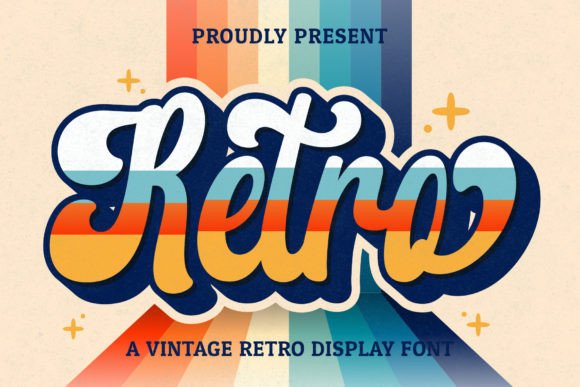
Retro Script: Infusing Vintage Soul into Modern Design
There’s a particular kind of charm that comes with a well-crafted handwritten font. It feels personal, immediate, and full of character. Retro Script is a typeface that taps directly into that feeling, but with a distinct, vintage-inspired twist. It’s not just a script font; it’s a stylistic statement, designed to evoke the warmth and authenticity of mid-century advertising, hand-lettered signage, and classic Americana. For designers, marketers, and creators looking to add a layer of nostalgic personality to their work, this font offers a direct and effective tool.
The Visual Language of Retro Script
At its core, Retro Script is a display font, meaning it’s built for impact rather than long-form reading. Its visual personality is defined by a few key characteristics. The letterforms flow with a connected, cursive elegance, mimicking the natural motion of a sign writer’s brush or a fountain pen. You’ll notice a pleasing contrast between thick and thin strokes, a hallmark of many classic script typefaces that gives the text a dynamic, rhythmic quality.
What truly sets it apart is its retro aesthetic. This isn’t a generic modern script. The curves, the slight slant, and the overall proportions feel deliberately pulled from a specific era—think 1950s diner menus, vintage product labels, or old-school tattoo flash. This inherent style makes it a powerful creative font for projects that need to communicate authenticity, craftsmanship, or a laid-back, nostalgic vibe. It’s a premium font in the sense that its design is intentional and cohesive, providing a complete stylistic package rather than just a collection of letters.
Where This Typeface Truly Shines
Understanding a font’s strengths is key to using it effectively. Retro Script excels in applications where personality and memorability are more important than pure legibility at small sizes. Its strength lies in setting a mood.
- Logo Design & Brand Identity: This is a natural home for a font like Retro Script. It can form the cornerstone of a brand identity for a craft brewery, a barber shop, a specialty coffee roaster, or an independent clothing label. It immediately signals a certain hands-on, authentic quality. Used as the primary wordmark, it becomes instantly recognizable.
- Packaging & Editorial Design: On product packaging, from hot sauce bottles to artisanal chocolate wrappers, this typeface adds a layer of perceived quality and care. In editorial design, it works beautifully for magazine headlines, chapter titles, or pull quotes in a publication focused on food, travel, or lifestyle.
- Digital & Social Media: In the fast-scrolling world of social media, a distinctive font stops the eye. Retro Script is perfect for creating engaging social media graphics, YouTube channel art, or website hero sections. It pairs exceptionally well with clean sans serif fonts for body text, creating a strong visual hierarchy that guides the viewer’s attention.
- Physical Goods & Stationery: For wedding invitations, event stationery, greeting cards, or even t-shirt designs, the font delivers that sought-after handmade feel. Its application in packaging design extends to stickers, hang tags, and thank-you notes, tying the entire customer experience together.
One of the most practical aspects of this particular font is its technical accessibility. Being PUA encoded is a significant advantage for any creator. This means all the additional glyphs, swashes, and stylistic alternates are easily accessible through standard software, without needing advanced typographic knowledge. You can quickly add a decorative flourish to the end of a word or swap out a letter for a more ornate version, giving you greater creative control and customization right out of the box.
Making It Work: Practical Guidance for Your Project
Choosing the right creative font involves more than just liking how it looks in a preview. Here’s how to evaluate and implement Retro Script effectively.
Evaluating Project Fit
First, consider the project’s core message. Does it align with the vintage, handcrafted, or nostalgic personality of Retro Script? It would be a perfect fit for a brand selling custom leather goods but might feel out of place for a cutting-edge tech startup or a formal law firm. The font’s style is a strong voice; make sure it’s speaking the right language for your audience.
The Art of Font Pairing
A display script like this rarely works alone. The key to professional typography is font pairing. Retro Script pairs beautifully with simpler, more neutral typefaces. A classic serif font can create a sophisticated, timeless look, while a clean sans serif font provides a modern, balanced contrast that ensures readability for paragraphs of text. Try pairing it with a geometric sans serif for a mid-century modern feel, or a humanist sans serif for something warmer and more approachable. Always test your pairings in context—see how they look in a logo mockup, on a website header, or on a product label.
Readability and Hierarchy
Remember its role as a display font. Use it for headlines, logos, and short, impactful phrases. Avoid setting long sentences or body copy in Retro Script, as its connected letters and stylistic details can reduce readability at smaller sizes. Use it to create a focal point, then let a more legible serif font or sans serif font do the heavy lifting for informational text. This approach not only solves readability issues but also strengthens the overall visual hierarchy of your design.
Exploring Its Full Potential
Before you start, take a moment to explore the font files. A quality font family often includes more than just the basic alphabet. Look for stylistic sets, ligatures (special character combinations), and swashes. These extras are what allow you to fine-tune the typography and make it uniquely yours. The PUA encoding of Retro Script makes this exploration straightforward, empowering you to leverage every design asset included.
Finally, consider the licensing. If your project is commercial—like a client’s logo, a product you sell, or a monetized website—ensure you have the appropriate commercial font license. This is a standard part of using any professional typeface and protects both you and the font’s creator.
In the end, a typeface like Retro Script