Rustic Cowboy: Capturing the Authentic Spirit of the American Frontier in Modern Design
The visual language of the American West is one of immediate recognition: it speaks of wide-open spaces, rugged individualism, and a history etched into weathered wood and worn leather. For designers, tapping into this powerful aesthetic requires more than just a Western theme; it demands a typographic foundation that carries the genuine weight and character of the frontier. This is where a typeface like Rustic Cowboy enters the conversation, offering a direct conduit to that storied visual heritage. It is not merely a font styled to look old; it is a purpose-built tool for conveying grit, permanence, and authentic craftsmanship. Understanding its design principles, practical applications, and the subtle art of using it effectively is key for anyone looking to harness this enduring aesthetic.
Anatomy of a Frontier Typeface: Deconstructing the Design
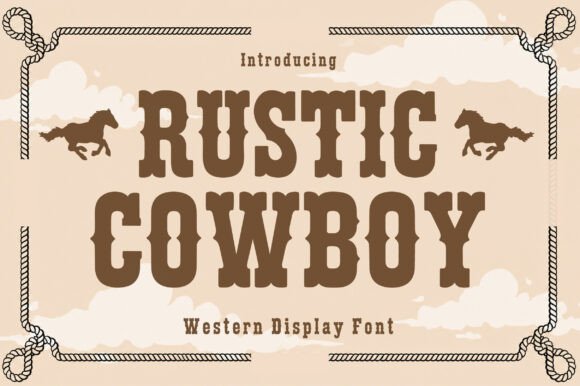
To appreciate the utility of Rustic Cowboy, one must first look at its architectural bones. This is a display typeface, meaning it is engineered for impact at larger sizes, such as headlines and logos, rather than for body text. Its character is defined by several key features that work in concert to produce its distinctive look.
First, the heavy, condensed letterforms give the font a monumental, blocky presence. Condensed faces are space-efficient, but here the compression serves an aesthetic purpose, creating a sense of solid, unyielding structure reminiscent of stacked timber or stone foundations. Second, the dramatic slab serifs are more than just decorative feet; they are substantial, anchoring each letter firmly and evoking the carved or chiseled details found on historical signage. Perhaps the most unique element is the spined silhouette. This refers to the subtle, vertical stress or curvature running through the center of many letters, a detail that mimics the natural grain and slight warping of wooden planks. It introduces an organic, hand-hewn quality that prevents the design from feeling sterile or overly mechanical.
Finally, the massive visual weight and rhythmic architectural terminals create a powerful texture when letters are set together. The terminals—the ends of strokes that lack serifs—are often blunt or squared, contributing to a consistent, rhythmic pattern across a word or line. This combination of features results in a typeface that feels both historical and powerfully present, a direct descendant of the wooden signage that once identified general stores, saloons, and stables across the frontier.
Practical Applications: Where the West Truly Works
The true test of any display font is its performance in real-world projects. Rustic Cowboy excels in contexts where a message of authenticity, strength, and heritage is paramount. Its applications span a wide range of creative and commercial endeavors.
In branding and identity, it becomes the cornerstone for businesses seeking to project a rugged, reliable image. A custom leather workshop, a craft distillery specializing in bourbon, or a farm-to-table restaurant can use it to create logos that instantly communicate their core values of craftsmanship and tradition. For event promotion, the font is a natural fit. Rodeo posters, country music festival banners, and outdoor adventure race graphics benefit from its high-energy, gritty personality, ensuring the event's theme is communicated at a glance.
The world of packaging and label design offers another fertile ground. Imagine the label on a jar of artisanal barbecue sauce, a bottle of small-batch hot sauce, or a craft beer from a brewery with a Western theme. Rustic Cowboy lends these products a tangible sense of place and quality, suggesting they are made with care and rooted in a specific, appealing culture. Even in digital spaces, it finds relevance. Website headers for outdoor adventure blogs, YouTube channels focused on homesteading, or podcast artwork for history shows can use the typeface to establish an immediate thematic connection with their audience.
The Art of Implementation: Using the Font with Finesse
Employing a typeface as bold as Rustic Cowboy requires a thoughtful approach to avoid visual overload. Its strength is its intensity, which must be balanced within a broader design system.
The cardinal rule is hierarchy and contrast. This font is a headline act, not a supporting player. Use it sparingly for main titles, logos, or pull quotes. Pair it with a clean, neutral sans-serif (like Open Sans or Lato) or a simple, readable serif (like Merriweather or Libre Baskerville) for body text and secondary information. This contrast allows the display font to shine without competing for attention, ensuring overall readability.
Context is everything. The font's historical connotations mean it can feel anachronistic or out of place if misapplied. It would be incongruous in a corporate finance report or a minimalist tech startup's branding. Always ensure the project's narrative aligns with the values the typeface embodies: heritage, ruggedness, and manual skill.
Pay close attention to spacing and alignment. Due to its condensed nature and heavy serifs, Rustic Cowboy may require adjustments to tracking (the space between all letters) and kerning (the space between specific pairs of letters) to achieve optimal legibility, especially at smaller display sizes. Ensuring letters don't collide awkwardly is crucial. Furthermore, its strong vertical and horizontal lines make it particularly effective when used in all caps, creating a powerful, monolithic block of text that reinforces its architectural quality.
Considerations and Complementary Choices
While Rustic Cowboy is a powerful tool, it is not a universal solution. Its distinct personality can limit its versatility. Designers must consider whether the project's scope requires a full typographic family with multiple weights and styles, which this single display font may not offer. In such cases, it can be used as a highlight element alongside a more flexible type family.
The most successful designs using this font often incorporate other sensory elements that reinforce the Western aesthetic. Texture is a key ally. Pairing the typeface with backgrounds that suggest aged paper, rough-hewn wood, or cracked leather amplifies its effect. A restrained color palette drawn from the landscape—dusty earth tones, sky blues, sunset oranges, and weathered whites—will feel more authentic than bright, synthetic colors. Supporting iconography, such as simple horseshoe, spur, or cactus motifs, can help round out the theme without overwhelming the typographic statement.
Ultimately, the decision to use a font like Rustic Cowboy is a decision to tell a specific story. It is a commitment to a visual narrative that values history, tangible craftsmanship, and the enduring spirit of exploration. When chosen with intention and applied with care, it does more than just display words; it imbues them with a sense of place, history, and unyielding character that resonates deeply with a broad audience seeking authenticity in an increasingly digital world.