The Authenticity Engine: Why the Smile Font is Resonating in the Age of Digital Noise
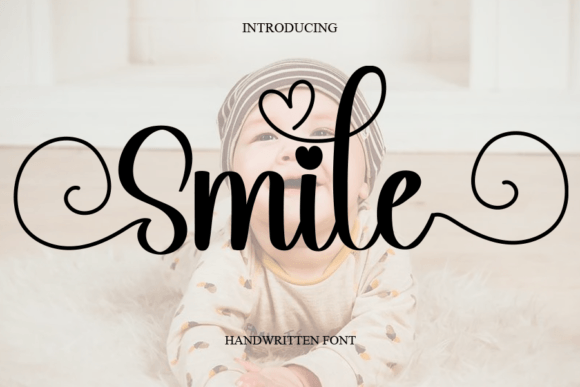
In an era defined by high-fidelity screens, vector-perfect scalability, and algorithmic precision, there is a palpable shift in the creative landscape. Professionals across the spectrum—from UX designers to high-level marketers—are noticing a hunger for the imperfect, the organic, and the tactile. As our digital environments become increasingly sterile and hyper-optimized, the need to inject humanity into our communications has never been greater. It is within this context that Smile, a simple handwritten font, has emerged not just as a tool for decoration, but as a strategic asset for connection. This versatile typeface is rapidly becoming a staple in the toolkit of creators who understand that in a world of automation, the human touch is the ultimate luxury.
The Psychology of the Handwritten Word
To understand the rising trajectory of Smile, one must first look at the psychological underpinnings of modern consumer behavior. We are currently witnessing a massive overcorrection against the "corporate gloss" that dominated the last decade of design. Consumers, weary of faceless conglomerates and robotic customer service, are gravitating toward brands that exhibit vulnerability and authenticity.
Typography plays a silent but profound role in this dynamic. A rigid, geometric sans-serif font communicates efficiency, neutrality, and structure. While these are valuable traits for body copy or technical documentation, they often fail to evoke emotion. Smile, by contrast, mimics the natural irregularities of human handwriting. It carries the subtle variations in weight and flow that our brains associate with personal effort and sincerity. When a user sees text rendered in Smile, the subconscious processing is different than when viewing standard print; it triggers associations with personal notes, journaling, and intimate conversation.
This is not merely speculation; it is a trend visible in the broader market. From the resurgence of stationery sales to the popularity of "bullet journaling," people are seeking ways to reclaim their individuality in a digital space. Smile serves as a digital bridge to this analog desire, offering the aesthetic of handwriting without the limitations of legibility that often plague script fonts.
Contextualizing Smile in the Creator Economy
The creative industry is currently undergoing a democratization of tools. High-quality assets that were once reserved for agencies with deep pockets are now accessible to freelancers, solopreneurs, and small business owners. This shift has created a demand for "plug-and-play" versatility—assets that can adapt to multiple contexts without requiring extensive modification.
Smile fits perfectly into this workflow. It is a simple handwritten font, but "simple" should not be confused with "basic." In design, simplicity implies a lack of friction. For the busy entrepreneur or the freelance graphic designer juggling multiple clients, a font that works seamlessly across different mediums is invaluable. Smile avoids the overly calligraphic flourishes that make many script fonts illegible on mobile screens, yet it retains enough character to stand out on a desktop header.
Consider the changing nature of the "side hustle" economy. Today’s creators are often their own copywriters, designers, and social media managers. They require typefaces that are forgiving and adaptable. Smile offers a solution that reduces the cognitive load of design decisions. It does not scream for attention with jagged edges or extreme slants; rather, it invites the reader in with a friendly, approachable demeanor. This adaptability is why it is finding its way into diverse sectors, from independent coffee shop branding to lifestyle influencer kits.
Practical Applications: Beyond the Greeting Card
While Smile is undeniably effective for traditional applications like greeting cards, its utility extends far beyond sentimental stationery. To leverage this font effectively, professionals must understand how to deploy it within a hierarchy of information. Using a handwritten font for large blocks of text is a rookie mistake that hampers readability; however, using Smile for specific elements can drastically improve user engagement.
1. Digital Marketing and Email Newsletters
In the crowded space of email marketing, open rates are driven by curiosity, but click-through rates are driven by trust. Marketers are increasingly using Smile in their email headers and "P.S." sections to break the monotony of standard body text. A header written in Smile mimics a personalized note from the founder, cutting through the noise of automated marketing blasts. It signals to the recipient that there is a human behind the screen, which is crucial for building the "Know, Like, and Trust" factor essential in modern commerce.
2. User Interface (UI) and Web Design
For web designers and developers, the trend toward "Human-Centered Design" is paramount. Smile is being utilized in UI elements where emotional connection is required, such as "404 Error" pages, onboarding modals, or testimonial sliders. Imagine a stark, minimalist website with a clean sans-serif layout; inserting a testimonial in Smile immediately differentiates the customer's voice from the brand's corporate voice. It adds a layer of visual storytelling that suggests the review is genuine and unscripted.
3. Social Media and Content Strategy
On visual platforms like Instagram and Pinterest, typography must be instantaneous. Users scroll rapidly, and text must be digestible in a split second. Smile excels here because of its clarity. Unlike heavy metal or gothic scripts, or overly ornate wedding fonts, Smile maintains high legibility even at smaller sizes or against busy photographic backgrounds. Content creators use it to overlay quotes, call-to-actions (CTAs), and annotations on images. Its natural feel complements the "authentic" aesthetic that currently dominates social algorithms, which tend to favor content that feels less produced and more organic.
The Aesthetics of Imperfection in a Vector World
There is a philosophical shift occurring in design circles regarding the concept of "perfection." For years, the goal was pixel-perfection—sharp edges, mathematical curves, and flawless symmetry. However, we are now seeing a pivot toward "Wabi-Sabi," a Japanese aesthetic centered on the acceptance of transience and imperfection.
Smile embodies this ethos. It does not try to be a perfect simulation of a machine trying to write like a human; it embraces the flow and rhythm of natural handwriting. This is particularly relevant in the tech and startup sectors. Tech companies often struggle with the perception of being cold or intimidating. By incorporating a font like Smile into their branding—perhaps in blog post titles or internal culture decks—they can soften their image. It communicates that while the technology may be complex, the people behind it are relatable.
Furthermore, the versatility of Smile allows it to cross lifestyle boundaries. It is just as effective for a yoga instructor’s booking site as it is for a boutique coding agency’s merchandise. This chameleon-like quality is rare. Many handwritten fonts are pigeonholed into specific vibes—too girly, too grungy, or too formal. Smile occupies a "Goldilocks" zone of neutrality and warmth, making it a safe yet expressive choice for a wide array of professional contexts.
Workflow Integration and Technical Versatility
From a technical standpoint, the relevance of a font is also tied to its performance. Modern workflows require assets that are lightweight and compatible across various operating systems and devices. As a simple handwritten font, Smile generally offers clean rendering without the heavy file sizes associated with complex, multi-layered typefaces.
For entrepreneurs and freelancers, time is the most scarce resource. The ability to install Smile and immediately see results—without tweaking kerning endlessly to ensure legibility—is a significant productivity booster. It allows for rapid prototyping. A designer can mock up a landing page concept using Smile to convey a specific mood to a client in minutes, rather than hours.
Moreover, the font supports a broad spectrum of applications ranging from physical merchandise (like T-shirts and mugs) to digital interfaces. This dual capability is essential for creators who operate in the hybrid space of e-commerce. A brand might use Smile on their website’s checkout button to reduce cart abandonment by adding a friendly, non-aggressive nudge ("Complete Order"), and then use that same font on the packaging of the shipped product to create a cohesive unboxing experience.
Future-Proofing Your Brand Identity
As we look toward the future of digital interaction, the value of human connection will only increase. With the rise of AI-generated content and synthetic media, audiences will become more skeptical of polished, generic visuals. Brand distinctiveness will increasingly rely on "voice" and "personality."
Typography is a primary carrier of personality. Choosing Smile is a forward-looking decision. It positions a brand as approachable and transparent. It suggests that the business values clarity over obfuscation and friendliness over formality. For the professional or creator looking to build a lasting relationship with their audience, Smile offers a subtle but powerful way to signal that they are open, accessible, and ultimately, human.
In conclusion, Smile is more than just a collection of vector paths; it is a response to the current cultural zeitgeist. It answers the market's call for authenticity with a simple, versatile, and legible design. Whether you are designing a high-converting landing page, crafting a heartfelt newsletter, or branding a new lifestyle startup, Smile provides the necessary warmth to bridge the gap between the digital screen and the human heart. It is a tool that proves, sometimes, the most effective way to move forward is to return to the simple, natural feel of the human hand.